

What to Wear in the Rain: A Fabric Guide to an Istanbul October
In an Istanbul October it's material, not thickness, that runs the wardrobe. How leather, denim, brushed-back sweats and knitwear each handle water, which layer belongs outside and which underneath — and what to do in the first half hour once you're home.
At one in the afternoon you can walk through Teşvikiye and feel overdressed in a single layer. By seven the same evening the pavement is wet and the jacket that looked right this morning is suddenly the wrong one. October in Istanbul isn't hard because it's cold. It's hard because it's two different days stacked into one.
What needs to change in the wardrobe now isn't thickness, it's material. How a garment deals with water — whether it holds the drop on the surface or takes it in, whether drying is measured in minutes or hours — tells you more about its usefulness in October than its weight ever will.
Where the water sits
Leather causes the fewest problems here. There's no open weave for water to sink into, so in a short shower it beads on the surface, wipes off without marking, and dries in minutes. Prolonged soaking can still spot real leather, so this isn't a raincoat claim — but for a five-minute walk, the leather side of the rail genuinely has the advantage.
Denim does the opposite. Cotton takes the water in, the fabric gets heavy, and once it dries it stays stiffer than it was for a while. Getting wet doesn't ruin it; it just means a slow recovery. A brushed-back sweatshirt is the slowest thing on the list — once it's saturated, that's the day gone for it.
Wool and wool-blend knits sit in a surprising spot in this ranking. They keep insulating while damp, which means getting wet doesn't take them out of service. That's exactly why knitwear deserves to be worn under something on a wet day, not as the outer layer.
What the outer layer is actually for
On a day with rain in the forecast, the outermost piece isn't there to keep you dry — only a technical fabric does that. It's there to delay the layer underneath getting wet. Framed that way, the choice gets simple.
A plain-cut leather jacket, or the dragon-embroidered one if you want the back to do some talking, works as the default for evenings that might turn: leather doesn't pass what it catches through to the sweatshirt underneath. Anyone after something quieter will find the outerwear rail is built on the same logic throughout.
A black denim jacket belongs to a different scenario: fine in drizzle, not in a downpour. It's good on days when rain is possible rather than certain, because if it does get wet, it gets wet on your behalf and keeps protecting what's under it. When rain is a certainty, it makes more sense to treat the denim jacket as a mid layer beneath leather rather than as the shell.
Keep the middle layer dry
The fastest way to have a bad wet day is to put the piece that provides your warmth on the outside. Worn alone, a hoodie is heavy within ten minutes and you spend the rest of the evening cold. The same hoodie under leather stays dry all day.
Three options in practice. A washed grey hoodie is the easiest of them — pulled out over the jacket collar, the hood covers the back of the neck too. The green half zip makes temperature easier to manage, since stepping indoors doesn't mean taking it off entirely. And a baby blue knit sweater is the one that stays warm even after picking up moisture. All three are the rain-tolerant end of the sweatshirt and hoodie selection.
Below the waist, drying time beats everything
On a wet day, colour and wash stop being aesthetic decisions. A light-wash jean darkens wherever it gets hit and that patch stays visible for hours. A plain black loose fit takes on exactly the same water and simply doesn't show it — that's the only difference, and on a rainy day it's the only one that matters.
The construction is a choice too. Knitted loose fit lounge pants dry noticeably faster than woven denim; morning rain is forgotten by lunchtime. If there's a lot of walking in the day, that distinction comes before fit when you're looking through the bottoms.
Three small calls
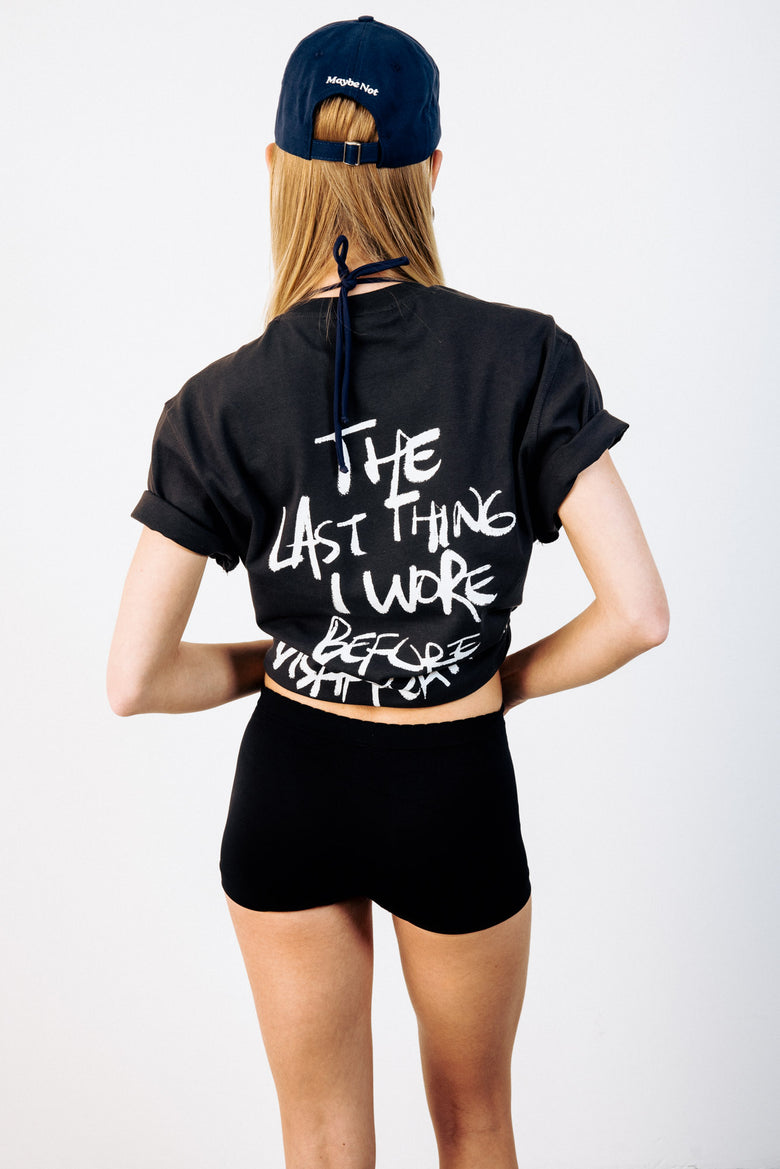
A cap stops being an accessory in the rain and starts being equipment. The brim keeps water off your face and glasses and saves your hair. The one detail is colour: on a pale cap, droplets leave dark spots that stay until it dries, so something dark is the safer pick right now. Keeping a couple of dark options on the cap shelf pays off from October through to March.
Bags follow the same material logic. A leather tote, unlike canvas, keeps what's inside dry through the first half hour. Looking through the bag selection, that difference turns into something very practical for anyone carrying a laptop in October.
The third one is the simplest: a spare pair of socks in the bag. When your shoes get soaked, what saves the day isn't the shoe. It's the foot.
The first half hour back home
Putting a soaked garment straight onto a radiator does more damage than the rain did. Wipe a leather jacket with a damp cloth and let it dry at room temperature on a wide hanger. Denim goes flat, not in the tumble dryer. A hoodie dries lying down rather than hanging, so the shoulder line survives.
That's the whole thing. An Istanbul October doesn't call for a technical wardrobe — just knowing which piece holds water on the surface and which one lets it in.
And if it's grey out and you're already nearby, the store on Hüsrev Gerede is a reasonable place to wait it out. Not a bad excuse to look at some streetwear between Nişantaşı and Teşvikiye either.

