

Unisex Streetwear Isn't Just Another Word for Oversized
What makes a piece unisex isn't the size tag. A look at which categories genuinely travel between two people, which don't, and the necklines, cuffs and waistbands that decide it.
The most-worn thing in a wardrobe is rarely the most expensive one. It's the piece two people reach for. There's always a single hoodie circulating — nobody remembers who bought it, everyone disagrees about who wears it better, and it goes out at least three times a week. That's the quiet truth of streetwear: garments move between people, and the ones that move well are the ones that end up mattering.
The industry calls this unisex. The label doesn't quite describe what's happening. For most brands, unisex is a sizing decision — take the men's block, scale it up, drop the women's block, and let one size range absorb the difference. But whether a garment reads correctly on two different bodies has almost nothing to do with the label and everything to do with a handful of concrete choices.
The pieces that were never gendered to begin with
Look at the core cast of street clothing and most of it started out with no gender attached. The hoodie came out of gyms and warehouses. The t-shirt was underwear that walked outside. Caps were work equipment, and socks never belonged to anyone in particular. These pieces weren't made unisex later — they were gendered later, and streetwear mostly undid the operation.
So it's no surprise when a hoodie or a plain tee works on two people at once. What's worth questioning is the assumption that the same logic carries across the whole rail. Jacket blocks, shirt collars, rise heights — some of these genuinely don't land the same way on two bodies, and printing "unisex" on the tag doesn't change that.
A shelf that turned the argument into a joke
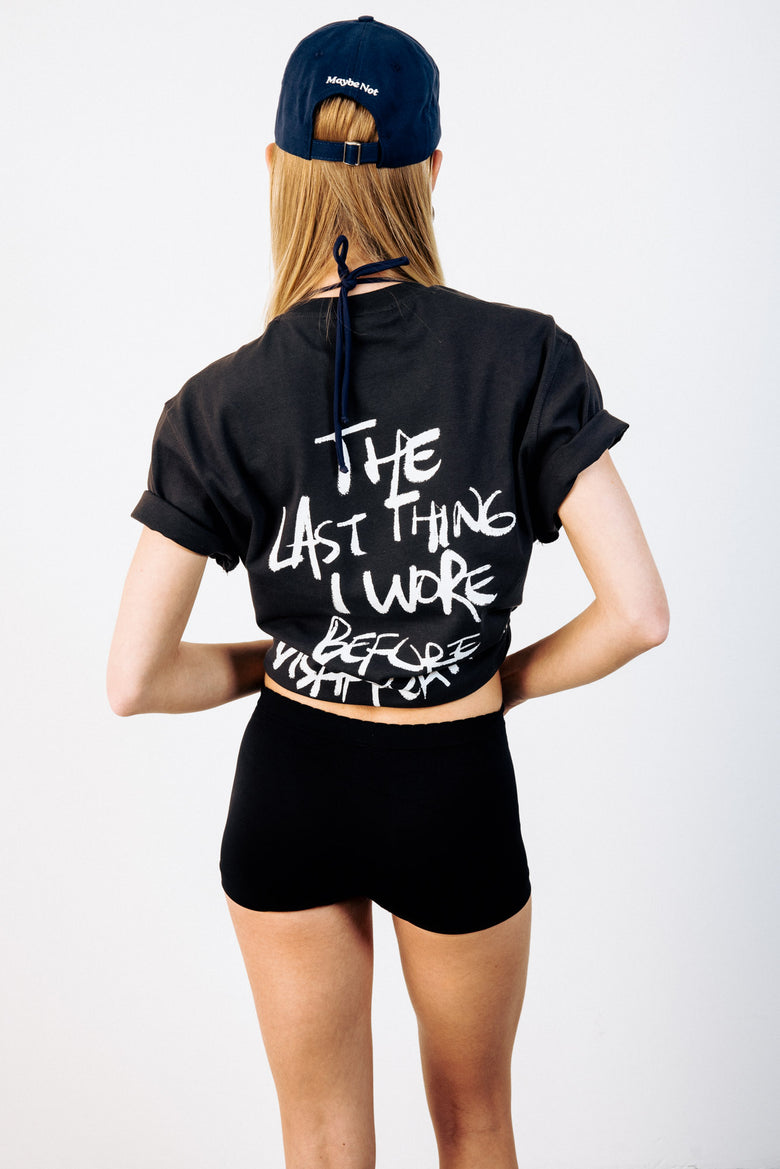
Sometimes the clearest commentary comes from the product itself. On the Freedom of Space shelf, Not Your Boy Cap and Not Your Girl Cap sit side by side in the same shape, the same fabric, the same measurements. The only difference is the sentence stitched on the front — and instead of assigning who wears which, that sentence hands the question straight back to the person holding it.
The till agrees. Both sell without any pattern in who buys them. Headwear is the most freely circulating thing in the whole category anyway: it's a head measurement, so the sizing argument never starts. A black cap doesn't really live in one wardrobe — it lives between two.
Unisex on the tag, not on the body
The trouble shows up in pieces sold as unisex but cut around a single body. It surfaces in three places.
Neckline depth
The same hoodie's neck ribbing can sit tight on a shorter neck and slide toward the shoulder on a longer one. A narrow, stiff rib makes that gap worse; something slightly softer and slightly wider lands the same way on both. That's why a plain black hoodie keeps doing the same job year after year — the neck asks nothing of anybody.
Sleeve length
This is the measurement unisex sizing loses most often. Sleeves grow with the size, so anyone sizing up for width gives up their wrist. The fix isn't rolling the cuff — it's checking the cuff first. A tightly knit cuff holds a fold all day; a loose one unrolls by lunchtime.
Length against the waist
Where a top ends depends on where the bottom carries its waist. The same sweatshirt reads compact over a high rise and long over a regular one. Which is why shared tops usually end up over a loose-cut bottom: the more forgiving the waistline, the less the top's length has to be exactly right.
What a two-person wardrobe actually looks like
Building a shared wardrobe isn't about buying everything labelled unisex. It's about knowing which categories genuinely travel. In practice the split is pretty clean.
Travels well: caps, socks, tees, hoodies and loose sweatpants. Logo socks are the extreme case — nobody has ever asked whose socks these are. A loose black bottom or a washed black hoodie changes hands just as easily, because in both cases length is the only critical measurement and a cuffed hem solves it.
Doesn't travel: leather trousers, slim jeans, structured shirts. These work close to the body, and forced onto the wrong one they look wrong on both. A black loose fit jean sits in between — it survives one size of difference, not two.
Knitwear is the interesting case. Knit stretches, so technically it's the most accommodating category of all, and then colour complicates it. In a heavier knit, neutral tones behave identically on everyone, while a decisive shade like baby blue tends to get claimed rather than shared. That isn't a flaw. It just means that sweater lives on one person's shelf instead of the communal one.
Don't let the size tag make the call
Unisex isn't a block scaled up until the problem goes away. It's choosing details that behave the same way on two different bodies: a soft neckline, a cuff that holds, a waistband with give, a headband that never starts a sizing conversation. Everything past that is personal — and the question of who wears something better is one the mirror answers, not the rail.
In the Teşvikiye store, the clearest version of this is two people trying on the same hoodie one after the other. Usually they both buy one. Sometimes only one of them buys it and both of them wear it. That's about as good a definition of unisex as streetwear has.

