

One Size Left: When Buying From the Archive Is the Right Call
The archive and the sale rail aren't the same thing: one is a price decision, the other a decision about time. What the remaining size tells you about the cut, the three kinds of pieces worth buying from the archive, which basics belong to the current line instead, and three checks for when only one size is left.
You've been looking at the same piece for weeks. The day you finally decide to buy it, the page loads and exactly one size box is still active. The rest are greyed out. The decision in front of you isn't about price — it's about time. If this piece isn't coming back, is the size that's left your size?
Archive shopping in streetwear runs on its own logic, and that logic has very little to do with buying in season. What follows is a practical frame for what holds up when you buy a past-season piece, and what ends up sitting in the wardrobe unworn.
A markdown is a price decision; the archive is a time decision
The two get treated as the same thing, and they aren't. A piece on sale may still be in production — the price dropped temporarily, and it can return in a full size run a few months later. That's why pieces with reduced prices don't demand urgency.
The archive works differently. Production there has closed; whatever units are left are all there will be. On lines like last season's tees, the price isn't a campaign — it's a closing. Knowing which of the two you're looking at changes how fast you need to move: in one case waiting is sensible, in the other waiting means losing the piece.
The size that's left is information, not coincidence
Which sizes sold out tells you more about how a piece is cut than any measurement chart. On a generously cut hoodie the middle sizes usually go first, and the XL left behind isn't the size nobody wanted — it's the size that carries the intended volume on its own. The reverse holds too: if a tee is down to XS and S, it was probably drawn to sit close to the body in the first place.
Which makes browsing the last remaining stock a kind of exercise in reading patterns. And when you find your own measurement among the one-off sizes still on the rail, you end up with something that wasn't available at the start of the season: a piece nobody is competing for.
What's worth buying from the archive
Three kinds of pieces hold their value once production has closed.
Prints that won't run again
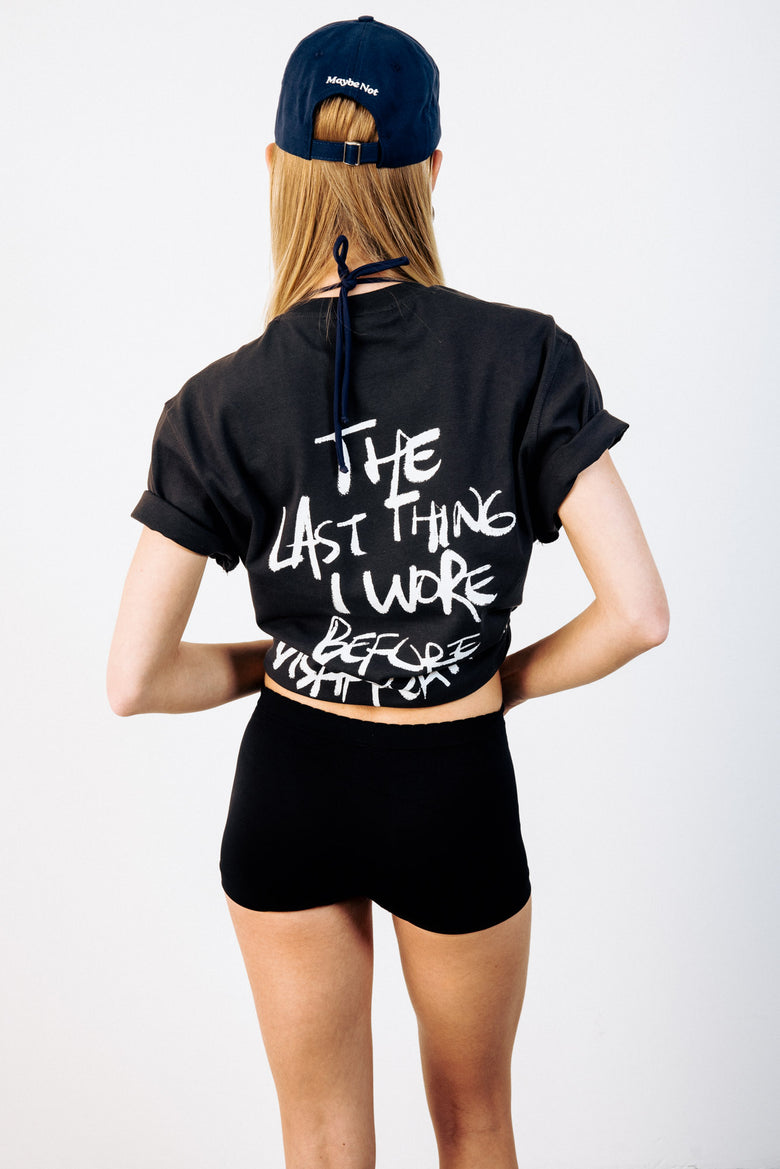
A graphic tee is unlikely to be reprinted; the print is tied to a season, a collaboration or a date. The fifth anniversary tee is the clearest case — there's no reason to produce it the same way twice. The same applies to colourways rather than whole styles: the body may continue while a brown pocket logo doesn't.
Knits with a pattern of their own
In knitwear the pattern is built into the fabric; it can't be added afterwards. So if something like the brown mountain-pattern sweater or the off-white monster knit is down to a single size and that size fits, there isn't much to deliberate. The knitwear line is a narrow selection to begin with — there's never an abundance of options here.
Shirts, where the cut doesn't date
Shirting is one of the categories least tied to how a cut moves with fashion. The surfer shirt or the hand-drawn embroidered version will do the same job two seasons from now. Archive risk on a shirt is low.
What to buy from the current line instead
Some pieces work against you when bought from the archive. If you genuinely like a basic hoodie, sweatshirt or pair of lounge pants, you'll want to buy the same one again in two years — and an archive piece can't promise that. The continuing core line exists for exactly that need. With something like the grey marl signature hoodie or the washed black version, there's no reward for hurrying; the only thing that matters is landing on the right size.
"Back in stock" is a third category
Then there are pieces that return, and they shouldn't be confused with the archive. Anything back in stock has been produced again: the size run is largely complete and you have a few days to decide. The black Definition tee sits in that group, open from S through XXL — no archive urgency required. The red hoodie from the same series, meanwhile, is down to one size. Two pieces from one collection, two entirely different decisions.
Three checks when only one size is left
For a piece you'll buy without trying on, these three questions prevent most of the bad calls.
Do you already own the same silhouette? If there's a hoodie from the same label in the same cut in your wardrobe, the size risk is close to zero. You're not guessing a measurement, you're comparing one.
Is it a layer or the main piece? A sweatshirt that will have something worn over it forgives being a size off. A shirt worn on its own does not.
Does the price absorb the risk? On something like the green loose fit lounge pants, where the price has dropped noticeably, the decision still holds up even if the fit comes out a size roomy. Taking the same risk on a four-figure knit is a different calculation.
If two of the three leave you hesitating, trying it on is the shortest route. When the last size of a piece is still on the rail at the Teşvikiye store, a ten-minute stop settles all of this guesswork.
What the archive actually does for a wardrobe
A wardrobe built only from the current season looks like a catalogue, even when it's well chosen — because everything in it was available to everyone at the same moment. Archive pieces are what break that flatness. A graphic printed two seasons ago, a knit pattern no longer in production, a shirt you've never seen on anyone else because only one size was left: these are the details that make an outfit read as someone's rather than a season's.
So the archive rail isn't a discount corner. It's where pieces sit whose timing has passed but whose function hasn't. And the last size left happening to be yours is one of the few moments in streetwear where luck pays off this directly.

