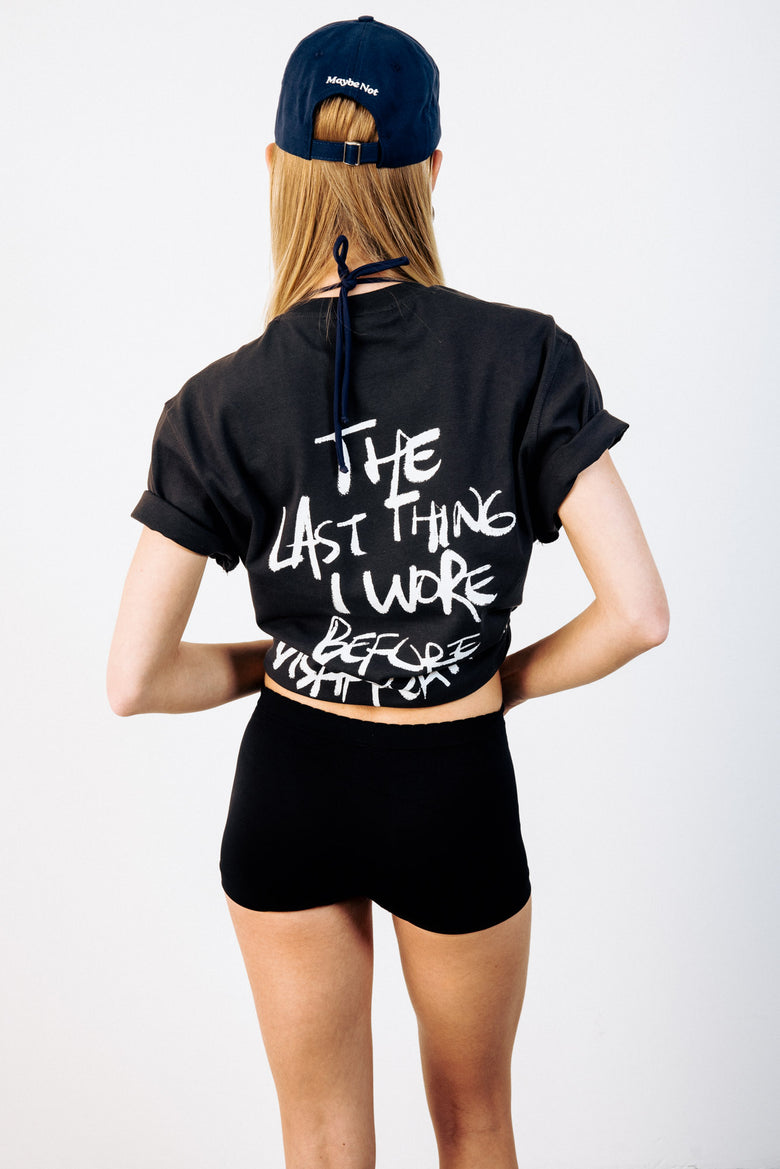


How to Build a Streetwear Outfit on a Budget, in the Right Order
The price of an outfit matters less than the order you spend it in. From tees to sweatshirts, bottoms to socks and the single outerwear piece worth the weight of a budget — what to buy first when money is tight.
The total price of an outfit tells you remarkably little about how that outfit reads. A twelve-thousand-lira setup can look scattered; a three-thousand-lira one can look resolved. What separates them isn't the amount spent but the order in which it was spent. When money is tight, most people start at the top of the list — the one piece they've been looking at — when a streetwear look is actually built from the bottom and from the inside out.
Most of the budget usually lands in the wrong place
The familiar version goes like this: seventy percent of the budget goes to a single attention-grabbing piece, and the remaining thirty gets stretched around it. The result is an expensive item sitting in a context that undercuts it. The reverse works better. Build the layers you'll repeat every day first, then set aside whatever is left for one piece meant to last.
Which is why the sub-1500 TL selection is better read as a starting shelf than a bargain bin. What comes off it forms the body of the outfit; the money you actually want to spend on preference waits until later.
First: there's no need to spend up on tees
A t-shirt has one job — to sit cleanly under a layer. If the collar goes slack quickly or the body shrinks after two washes, that's a fabric problem, not a price problem. Beyond that, expectations of a tee are limited, which makes it the smallest share of the budget by default.
For short sleeves, past-season prints remain the sensible entry point. By late September there are fewer days when a tee works alone, so going straight to long sleeve makes sense too: the green A Simple long sleeve does the same job on its own as it does under a sweatshirt. If you'd rather stay in black, the Hydrated tee sits in the same price band.
The one mistake to avoid here is buying three different graphic tees. If there's type across the chest of a piece that goes under a layer, that type should either show completely or not at all — a half-covered print becomes the most distracting detail in the outfit.
Second: with sweatshirts, weight is the variable
On the upper layer, price differences do correspond to something — just not where people expect. The difference shows up in whether the hood still stands up after ten washes and where the shoulder seam lands. A cheap sweatshirt isn't a bad decision; it's a shorter one.
At the lower end, the black A Simple hoodie runs a full size range and is built to be the workhorse of a daily rotation. If you want the colour lifted, there's the white Hydrated sweatshirt. A step up, the washed black hoodie arrives already faded, which spares it that slightly too-clean look a brand-new piece carries for its first month.
Buying two sweatshirts instead of three and moving the difference downward almost always produces a better result. The sweatshirt and hoodie range already spans a wide price spread, so both strategies live on the same shelf.
Third: there are two routes for the lower half
Bottoms are where the budget conversation breaks in two. Both routes are valid — they just shouldn't be mixed.
The first is to keep the bottom cheap and plain. Something flat like the black A Simple lounge pants clears space for the upper layer and keeps attention where you put it. The rest of the bottoms selection holds options built on the same logic.
The second is to put the weight of the budget directly here. A pair of jeans outlasts a hoodie by years, and once the cut goes there's no recovering it. The Core Denim black distress jean is the argument for this side: the wear is already worked in, so it settles rather than deteriorates. Picking one of these two routes gives a more coherent result than trying to buy a cheap bottom and an expensive top at once.
What the 240-lira pieces are actually doing
This is the part the budget conversation skips. In most outfits the cheapest pieces are the ones that visibly change the read.
A sock sitting in the gap between hem and shoe can end up being the only colour in the outfit — lime logo socks do exactly that inside a neutral setup, and the whole sock range holds one price band. Caps work the same way: the camel F Logo cap can carry the single warm tone in an otherwise black outfit on its own, and the cap selection offers a few directions at that level.
What's in your pockets counts too. A black card holder and a logo keyring aren't visible parts of an outfit, but they are parts of the day — and they're usually the most durable place for whatever is left at the end of a budget.
And if it all goes into one thing?
If the question is "I'm buying one piece this season," the answer sits in outerwear. A jacket pulls up everything underneath it; worn over a 490-lira tee, the whole look still reads at the level of the jacket. The reverse doesn't hold — a bad jacket over an expensive tee drags the outfit down with it.
The black Core Denim jacket is the lowest-risk version of that role. A denim jacket doesn't turn over with the season, its cut doesn't date, and it goes over a tee and a knit equally well. Half the budget here and the other half spread across the basics is the split that holds up in most scenarios.
It's worth settling this order before looking at what's been marked down; the reduced selection only helps once you know what's missing. Otherwise a discount just buys you another copy of something already in the wardrobe.
Trying things on in Nişantaşı
The most expensive mistake in budget shopping is the piece that never gets worn because the size was wrong. On screen, 790 lira looks cheap; unworn, all 790 of it is gone. That's why trying things on is worth more than the price gap, particularly with bottoms and outerwear. Working through two sizes back to back at the Teşvikiye store is both faster and more accurate than entering a returns loop online.
Once the order is set, a tight budget stops being a disadvantage. When you know what comes now and what comes later, what's missing isn't money — it's just sequence.

