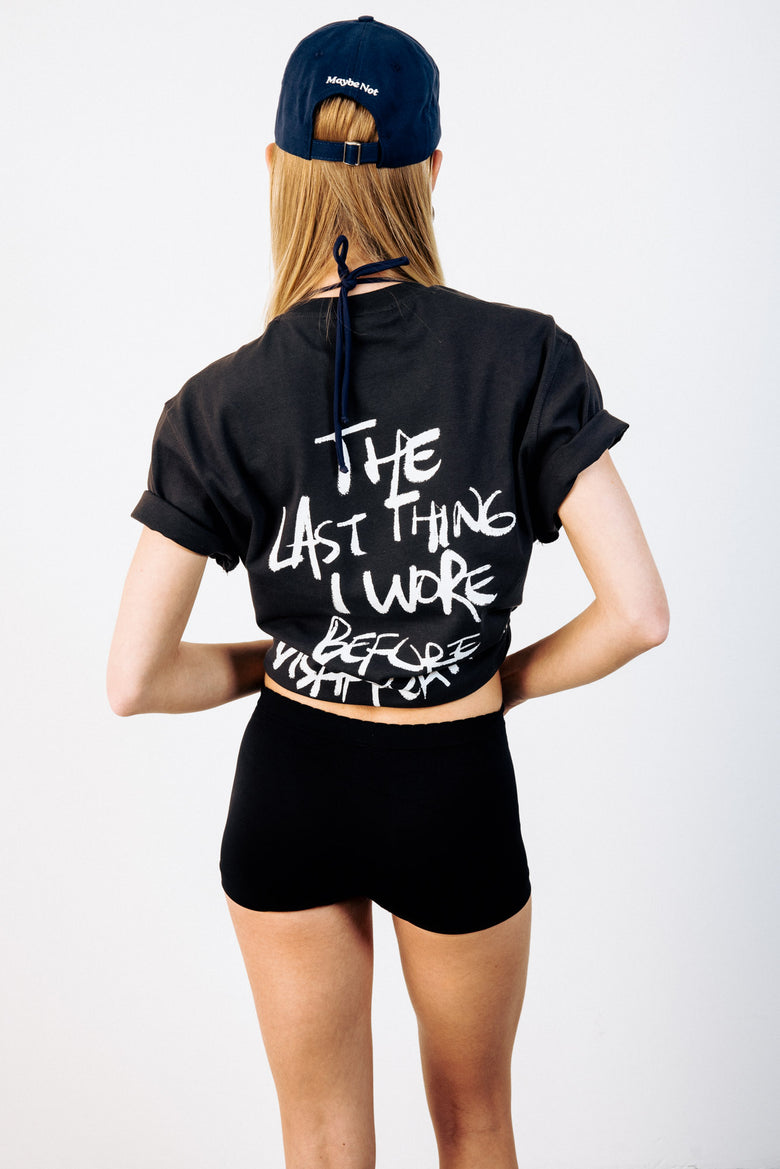


Where Oversize, Boxy and Loose Fit Actually Part Ways
The fit name on a label is not a measurement. Oversize is defined by the shoulder seam, boxy by the width-to-length ratio, loose fit by the leg opening — and relaxed connects them. A streetwear glossary on what the four words really mean, how fabric rewrites a pattern, and where volume belongs in an outfit.
Two hoodies from the same label, both marked L. On one, the shoulder seam stops right at the edge of the shoulder. On the other it has slid a quarter of the way down the arm. The label says the same word for both. Held side by side, the point becomes obvious: fit names describe an intention, not a measurement. The measurement lives in where the seam lands, how width relates to length, and where the fabric falls under its own weight.
Oversize, boxy, loose fit, relaxed. Product pages swap these four words around as if they were interchangeable, but each one describes a different part of the body and does a different job in an outfit. Knowing which is which is the most concrete thing you can carry into a size decision made on a screen.
The three points that read a fit
Looking at a top, three places tell you almost everything. Where the shoulder seam ends. How chest width compares to body length. Whether the sleeve and hem gather at the wrist and ankle or stay open. Put those together and the word on the label stops mattering, because you already know how the piece will sit.
Bottoms shift the reference points: hip width, the volume around the knee, and how open the leg opening is. A trouser usually looks wide because of a decision made below the knee, not at the waist.
Oversize starts at the shoulder seam
Oversize tends to get read as "buy a size up," which is not what the pattern is doing. In a true oversize cut the pattern itself has been redrawn: the shoulder seam is deliberately dropped, the armhole opens up, the body is rebuilt around both. Sizing up a regular pattern simply scales everything at once, shoulder line included. The two do not land in the same place.
The practical test: in a well-drawn oversize, sleeve length does not grow, because the drop at the shoulder already carries the arm down. A sleeve covering the back of your hand means you went up a size, not that you are wearing an oversize cut. On dropped-shoulder pieces like the black A Simple Hoodie, you can feel where the seam sits without a mirror — the sleeve hangs off the upper arm rather than the shoulder.
Boxy is a ratio, not a width
Boxy is about proportion more than volume. The closer a garment's width gets to its length, the boxier it reads. That is why a boxy tee does not have to be especially wide; it is usually shorter than expected. The hem finishes around the belt line and the body squares off.
In an outfit this translates directly: a boxy top makes it easier to carry volume below. Because the shorter body keeps the waistline visible, a wide trouser does not swallow the torso. The off-white Bead T-Shirt and the shorter-bodied tees generally work on this logic. Choose a tee that is both long and wide and the two volumes stack, pulling the whole silhouette downward.
Where boxy goes wrong
Put a slim trouser under a boxy top and the ratio inverts: wide chest, narrow leg, and the garment reads shorter than it is. Boxy cuts want a bottom that shares the volume with them.
Loose fit keeps the volume in the leg
Loose fit is used almost exclusively for bottoms, and what it describes is everything below the waist being let out. Comfortable through the hip, open at the knee, no taper toward the ankle. Unlike baggy, loose fit keeps that volume under control: the trouser breaks once over the shoe instead of piling up on it.
The Mellow Stone Wash loose fit jean sits in the middle of that range — even volume down the leg, nothing collecting at the hem. The other washes on the denim side repeat the same pattern in different tones, and tone changes how much of the cut you actually see: lighter washes exaggerate the volume, darker ones make the same trouser read slimmer.
On the knit side the equivalent is the Signature loose fit lounge pants. In a woven trouser the fabric's structure holds the shape up; in a knitted bottom, weight does that job. A thin sweatpant cut from the identical pattern will cling to the leg and never look loose.
Relaxed is the name for the middle
Relaxed is the most slippery of the four, largely because it is often a polite way of saying "slightly roomier than regular." It does have a real definition: a few extra centimetres through the body, a little more room in the armhole, shoulder seam still in place. Because it sits between the extremes, a relaxed piece connects slim and wide cuts across a wardrobe.
It is also the most useful fit for layering. Pieces like the black half zip sweatshirt or the black long sleeve shirt stay quiet worn alone and add no bulk under a jacket. Most of the core pieces in the store are deliberately held in this range.
How much fabric changes the fit
The same pattern can behave like two different garments depending on the cloth. A heavyweight sweatshirt holds its own shape; it falls from the shoulder without collapsing, so the cut shows exactly as drawn. A lightweight tee takes the shape of the body underneath, and even a boxy pattern softens on it.
Knitwear widens the gap further. On the knit side, gauge overrules the pattern: a chunky, loosely knitted sweater reads wide even when cut to a regular shape. The navy sweater vest does the opposite — with no sleeves, it shows the shoulder line as it is and exposes the fit of whatever goes underneath.
Outerwear is measured on a different scale again, since it has to make room for everything below it. A piece like the washed grey denim jacket should be tried on with your heaviest sweatshirt in mind, never on its own.
How many fits can share one outfit
The approach that works in practice is to concentrate volume in one place. If the top is an oversize hoodie, something more measured than a loose fit below keeps it balanced; if the trouser is wide, a boxy or relaxed top is enough up top. Widen both at once and the silhouette disappears. Narrow both and the streetwear read goes with it.
A third layer changes the arithmetic, because a jacket is going to add volume on its own — which means the two pieces underneath should both stay calm. On the sweatshirt and hoodie side, the weight you pick is what decides that.
Short glossary
Oversize — shoulder seam deliberately dropped, body redrawn around it. Not the same as sizing up.
Boxy — width approaching length, usually a shorter body. Makes volume below easier to carry.
Loose fit — everything below the waist let out, no taper at the hem. Volume stays even down the leg.
Relaxed — shoulder line in place, a few centimetres of extra room. The most flexible range for layering.
Standing in front of the rails in Nişantaşı, turning these four words back into measurements saves half the time usually spent scrolling. The word on the label makes a promise. Where the seam ends tells you whether it was kept.

