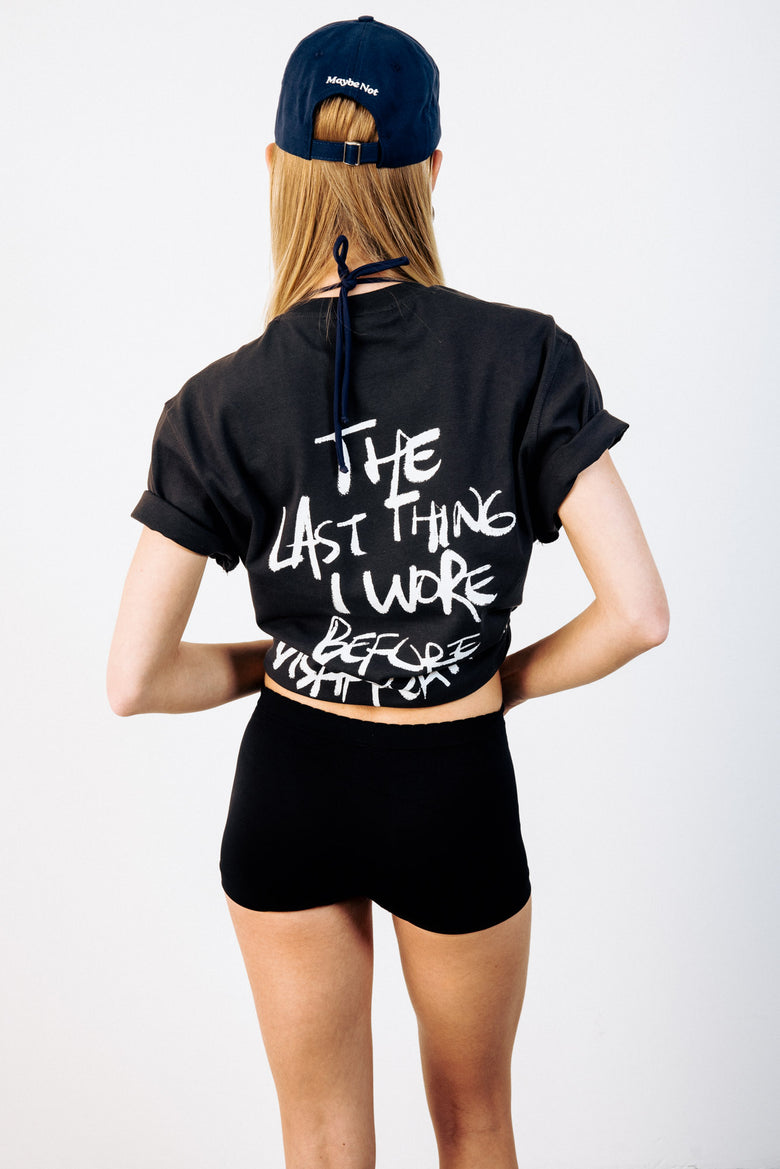


What One Colour Actually Does in a Neutral Streetwear Outfit
Autumn reporting says saturated tones are back while street style stays reduced and neutral. Here is how both end up in the same outfit — surface area, a solid base, and the logic of a single accent piece.
The most debated piece in an outfit is rarely the biggest one. Last week someone stood at the counter for a full minute deciding between two pairs of socks — they already owned the black ones, and the question was whether the second pair should be lime. The hoodie in their bag had taken thirty seconds. That is how colour decisions tend to go: the smaller the piece, the longer the deliberation, because that small surface is the only part of the outfit doing any talking.
This season's reporting lands on the same tension. Autumn/winter coverage keeps pointing to saturated tones — burgundy, emerald, plum — coming back into the conversation, while street style stays committed to a reduced palette of black, grey, beige, off-white, navy and olive. Those two things aren't in conflict. Colour returning to streetwear doesn't mean a whole wardrobe turning colourful; it means one saturated piece placed carefully on a neutral base.
Surface area matters more than the shade
The same burgundy is a detail on a sock, a character on a hoodie and a statement on a pair of leather trousers. So the first question isn't whether a colour suits you — it's what percentage of the outfit it's going to cover.
A rough scale helps. Socks and caps sit at roughly five percent of the total surface, a tee or hoodie takes you to thirty or forty, and trousers or outerwear push past half. It's almost impossible to get the five percent band wrong, which is why something like a pair of lime logo socks or the yellow For Your Pleasure cap never disturbs an otherwise neutral look. If anything, they give the eye somewhere to land between all that grey and black.
Burgundy is the gentlest way in
What makes burgundy easy is its proximity to black. From across the street it reads as a dark tone; up close it turns out to be a colour. Sometimes A Hoodie in bordeaux and the higher-contrast red Definition hoodie mark the two ends of that range: the first works quietly with grey and raw denim, the second wants to be the main sentence of the outfit.
What goes underneath decides which one you get. Under a burgundy top, black loose fit jeans shut the bottom half down and push the colour forward, while a dark navy wash sets two deep tones side by side and makes the whole thing read as one piece. Same top, two different days.
Green has a heavy version and a light one
Green is the most misread colour in streetwear, and the problem is never the shade — it's the material carrying it. On brushed cotton it stays soft and everyday: the green Definition hoodie goes out with a black tee and white socks on any given weekday. Put the same tone on leather and the weight changes completely. Green leather trousers stop being an accent and become the centre of the outfit, which means everything above them has to go quiet — plain black hoodie, plain tee, no second colour.
That distinction holds across the coloured pieces on the leather rail generally. Leather makes any colour sitting on it look brighter and harder than the same colour on cotton, so a shade that behaves like an accent in jersey turns into a lead character in hide.
Cool accents are quieter than warm ones
Baby blue, ice blue and their neighbours sit low enough in saturation to behave almost like neutrals. The Mountain Knit sweater in baby blue is the clearest example — obviously coloured at first glance, yet it never unbalances anything, because the eye files it alongside grey. Among the lighter knits on the shelf, this is the lowest-risk place to start experimenting as September comes in.
Further down the scale there's the blue Worldwide hoodie and the navy-plum Soap tee: both dark enough to stand in for black, both clearly not black once daylight hits them. If a wardrobe has drifted too far into black, these tones are a good way out of it.
Turning down a loud tone like butter yellow
Yellow is the hardest colour on the list, because it reacts more than any other to skin tone and to light. On a small surface, or in a softened version, that stops being a problem. The butter yellow Tutto Passa tee sits right in that middle: close enough to cream to behave like off-white, yellow enough to show up in daylight and in photographs. Layer a washed black hoodie over it and only the collar and hem stay visible — probably the most practical way to dose a colour at five percent.
The accent doesn't work without a base
All of this rests on how solid the colourless half is. A base usually comes down to three things: bottoms that fit, a single-colour top, and an outer layer with no opinion. The black A Simple hoodie and the grey marl Signature both do that job — they support whatever colour lands next to them without joining in. Below the waist, the darker washes on the denim rail or a plain black pair of loose fit lounge pants serve the same purpose.
With the base in place, choosing colour gets easy, because only one decision is left. Without it, no colour fixes anything — every piece just starts talking at once. It's the mistake we see most often around Nişantaşı and Teşvikiye: buying the colourful piece before there are enough neutral ones to hang it on.
One colour, two seasons
September is a strange month for colour in Istanbul. Summer hasn't finished as a palette, and autumn tones still feel early. The approach that works best through the crossover is to carry a single saturated piece over from summer and set it against an autumn base. The yellow tee you wore with shorts all summer becomes a different garment under a dark hoodie in September; a burgundy top worn on its own in August moves under a leather jacket by October.
If you're after a coloured piece, one question is enough while you're looking through the hoodie and sweatshirt rail: how many of the four neutral pieces already in your wardrobe can this tone go over? Three or more, and the colour earns its place. Two, and it probably makes more sense to test it on a smaller surface — on the sock side or across the tees. Pieces like a red leather jacket, which count as an entire outfit on their own, belong to a separate category altogether: they don't join a wardrobe, they arrange one around themselves.

