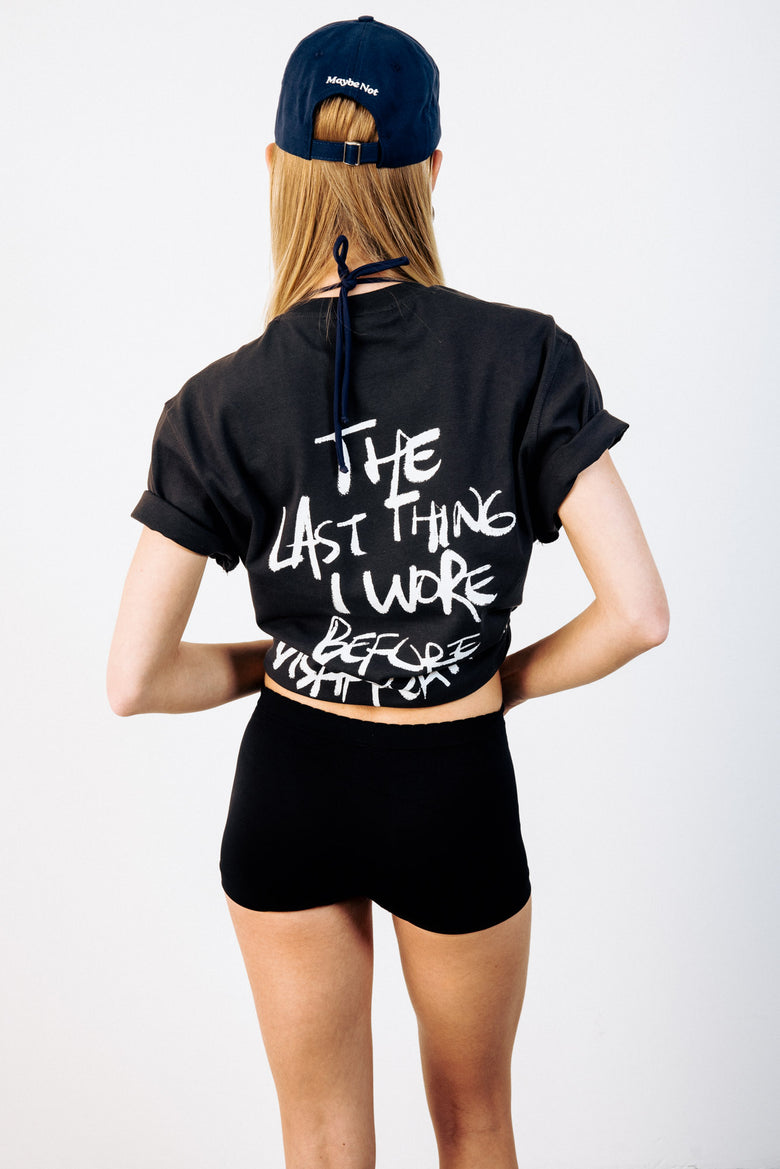


Five Common Streetwear Styling Mistakes — and How to Fix Them
An outfit usually breaks down because of the order of the decisions, not the pieces. Here are the five mistakes we hear about most often in the store, and the fix for each one — none of which require buying anything new.
You rarely notice an outfit isn't working while you're still in front of the mirror. It hits about ten minutes after you've left the house. Every piece is something you like on its own, and yet something refuses to settle. Most of the time the problem isn't quality or brand — it's the order the decisions were made in.
The five points below come out of the sentence we hear most often in the store: "I bought this and then couldn't work out what to wear it with." None of them call for a new wardrobe. Most are solved by moving what you already own into a different position.
1. Every piece talking at the same time
A printed tee, an embroidered cap, logo socks and a graphic sweatshirt all at once and none of them get read. The eye has nowhere to land, and the outfit ends up looking overworked rather than considered.
The fix: one graphic per outfit is enough. If you've picked something loud from the printed tees, keep the layer above it quiet — a washed grey sweatshirt or a plain hoodie frames a print instead of competing with it. It works the other way round too: if the sweatshirt is doing the talking, the tee underneath is just ground.
2. Committing to a single fit logic
Treating streetwear as a synonym for oversized is a common shortcut. But when there's volume on top and volume below, the silhouette disappears — and when everything is cut close, the outfit stops reading as street and starts reading as sportswear.
The fix: volume on one side, structure on the other. A pair of loose fit black jeans with something more collected up top, or a plain black hoodie with a cleaner cut below. The measurement that matters isn't the letter on the label — it's where the shoulder seam lands and how much of the shoe the hem covers.
3. Putting all the investment into the upper body
Most wardrobes are crowded at the top and down to three options at the bottom. The sweatshirt shelf keeps growing, every outfit ends on the same trousers, and nothing feels new.
The fix: if you own five things up top, keep at least three different cuts below. A denim with a distinct wash, a relaxed pair of loose fit lounge pants for everyday wear, and something more structured. That trio on the bottoms side turns each upper piece into three separate outfits.
4. Spreading the palette across more than three tones
Colours that look good individually can scatter when combined. A bright tee, a cap in a different colour and a shoe in a third tone next to each other and the outfit reads like a list rather than a selection.
The fix: three tones works — a base, something close to it, and one small accent. Two neighbouring neutrals like a brown hoodie and a grey pocket logo tee leave enough room for a third colour to register. Put the accent on the smallest item, too — a cap or a pair of socks is a far lower-risk place to experiment than a jacket.
5. Thinking about the second layer only when it gets cold
At the end of August the gap between afternoon and evening is still only a few degrees, but a layer isn't purely a temperature decision. The piece that goes over an outfit also sets its silhouette — and when it's added as an afterthought, it shows.
The fix: build the layer in from the start. A half-zip sweatshirt draws one neckline open and a completely different upper body closed. For something lighter, the finer gauges on the knitwear side or a long sleeve shirt worn open do the same job without the weight of a jacket.
All five in one sentence
A good outfit isn't the sum of your best pieces; it's the order of pieces that make room for each other. If one thing is speaking, the rest should listen. If there's volume on one side, there's structure on the other. And the palette stops at three tones.
Most of this gets settled by trying rather than reading. Putting pieces side by side in our Teşvikiye store is still the quickest way to see it, and if you're spending time in Nişantaşı, starting from the caps and building the outfit backwards isn't a bad habit either. The only real rule in Istanbul streetwear is that the outfit shouldn't speak louder than the person wearing it.

