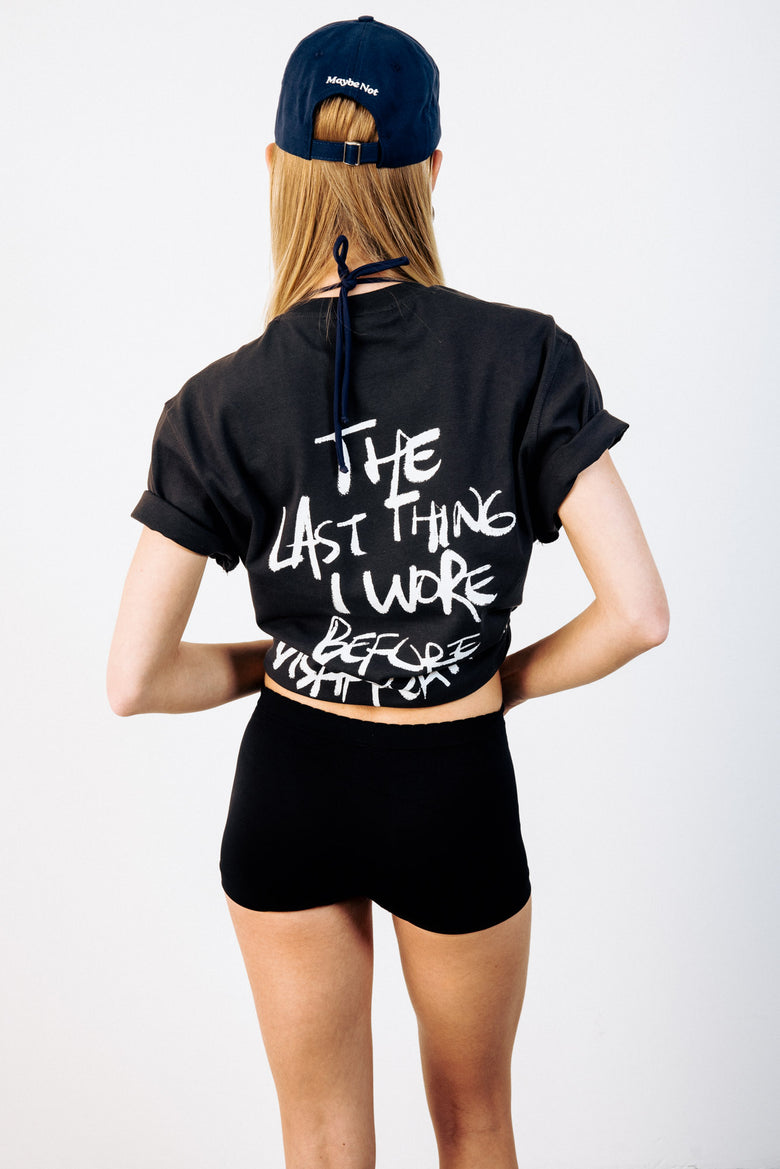


A Streetwear Fit Guide: Choosing Between Oversized, Loose and Regular
Size is a number; fit is how that number behaves on the body. From the shoulder seam to the leg opening, a practical guide to telling oversized, loose and regular apart — read through pieces currently on the rail at Freedom of Space.
Two t-shirts in the same size can sit completely differently on the same body. Behind "I took a medium and it didn't work" there is usually a fit problem rather than a size problem: where the shoulder ends, how far the sleeve travels, how much room the body of the garment leaves. Size is a number. Fit is what that number does once it's on.
What follows is a way of reading the three cuts that get confused most often in streetwear — oversized, loose and regular — using pieces actually stocked at Freedom of Space. The point isn't to tell you which size to buy. It's to narrow down the three places worth looking when you pick a garment up.
Size is a number, fit is a decision
The three terms get used interchangeably, but they do different jobs. Regular follows the body and places the shoulder seam at the edge of the shoulder — treat it as your reference line. Loose keeps that same shoulder line and opens the room up through the body and sleeve. Oversized deliberately drops the seam down onto the arm; the silhouette now belongs to the garment's own geometry rather than to your frame.
Which leads to the practical part: sizing up doesn't make a garment oversized, it just makes it disproportionate. If you want the oversized look, a piece cut that way will always beat the same piece bought two sizes larger.
Up top, the shoulder seam decides everything
The first thing to check isn't the chest width, it's where the shoulder seam falls. Sitting at the edge of the shoulder, the garment tracks the body and the arm reads clearly. Dropped onto the arm, the fabric falls freely from the shoulder and the sleeve looks visually shorter.
The Signature Logo tee in black is a useful reference point: shoulder in place, body relaxed but not empty. At the other end, A Simple Hoodie in black is a drop-shoulder, heavyweight piece that builds its own volume even worn on its own. Once you've seen the gap between those two, the rest of the tee rail and the sweatshirts and hoodies get much easier to read.
A quick check
With the top on, reach both arms forward. If the shoulder fabric lifts with your neck, it's too small. If there's no tension at the shoulder at all and the body goes completely slack, you've gone a size too far.
Down below, it's settled at the leg opening
Bottoms tend to get discussed at the waist and hip, but it's the leg opening that finishes the look. Too wide and the fabric stacks on the shoe and shortens the leg; too gathered and it argues with whatever volume you've got above it.
Black loose fit jeans hold the same width the full length of the leg and leave a single break over the shoe — which is exactly why they stay balanced even under a heavy hoodie. For a softer drop, the Signature loose fit lounge pants in black give you that width in a knit. Putting the denim and the wider bottoms selection side by side is the fastest way to feel the difference between the two constructions.
Add a layer and the maths changes
Proportions that work on a single piece can fall apart the moment something goes over them. The rule is simple: whatever goes underneath should be thin and close, whatever goes on top should be wide and structured. Reverse it and both pieces flatten each other.
That's why the Signature long sleeve shirt in black earns its place as a base layer — collar and cuffs left showing, framing whatever sits over it. On the outer layer, a knit like the Mountain Knit in baby blue takes its volume from the yarn itself and doesn't need sizing up; the same holds for the Signature half-zip in green. If you're experimenting with layers, the knitwear and the shirts are worth looking at together.
The extremities hold the proportion
Fit doesn't stop at the torso. The head and the ankle close the two ends of a silhouette and make the proportion legible. A structured cap next to a voluminous top — the Overthinker Cap in black, say — pulls the width above back in, while under a wide leg the black logo socks carry the line all the way down to the shoe. Which is why colour choice across the caps matters as much as the cut does.
Three ready-made proportions
Balanced: regular tee, loose fit jeans. Shoulder in place up top, one break at the bottom. The one you can put on without thinking.
Volume up top: oversized hoodie with a tidier bottom half. Keeping the width high makes the leg read longer.
Layered: long sleeve shirt, knit over it, loose bottoms. The setup that asks for the most balance and repays it most.
Once fit becomes a measurement rather than a guess, shopping gets simpler: choosing between three ways the same size can sit beats bouncing between sizes. If you're around Nişantaşı and Teşvikiye and can pick things up and look at the shoulder seam yourself, that's still the quickest way to read an Istanbul streetwear rail. And it's hard to unsee once you have.

