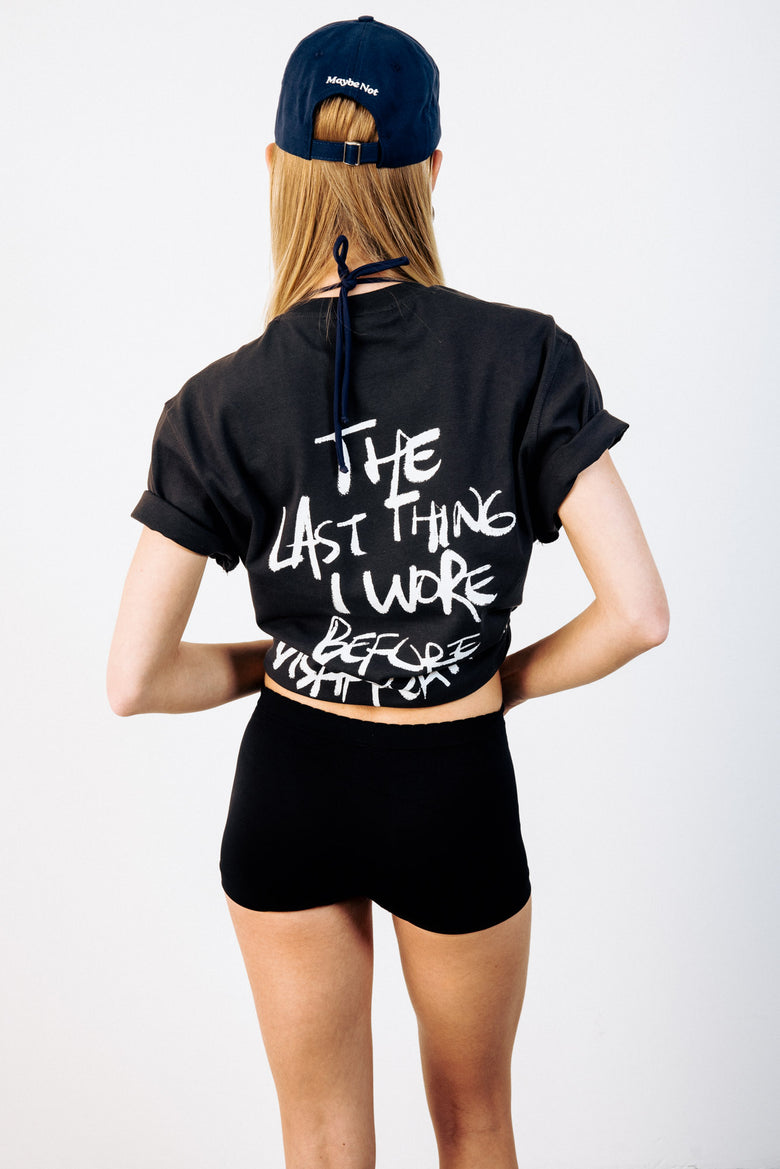


How Casual Is Casual? Streetwear for the September Return to the Office
In an office with no written dress code, the line isn't drawn by category — it's drawn by surface, closure, logo size and the one dark colour you commit to below the waist. Four decisions that carry a streetwear wardrobe through the first week of September.
There's a line at the bottom of almost every job listing now: dress code casual. Nobody who reads it believes it. Removing a written rule doesn't remove the boundary, it just makes it invisible — everyone has to draw their own, and for the first week the most anxiously dressed person in the room is usually the one taking that line most seriously.
The first Monday of September is when this is at its worst. A wardrobe just back from holiday, weather that hasn't finished with summer, and a working routine starting over all land in the same morning. If you dress in streetwear, the question isn't whether it belongs at work — it has been there for years. The question is at what setting. Because what makes a garment workable is rarely its category. A list that says no hoodies, yes shirts doesn't survive contact with reality. Four variables do: surface, closure, logo size, and the colour you pick below the waist.
A woven top moves everything up a register
Picture two tops in the same size and colour, one jersey and one woven. The second one holds the shoulder, carries structure even as it creases, and quietly shifts how a room reads you. That's why a shirt is the easiest thing a streetwear wardrobe can lend to an office. The black long-sleeve Signature shirt is the lowest-risk version of it: nothing to read on it, cut loose enough to stay on the street side, flat enough to hold up at a desk.
If black feels severe, a brown shirt behaves like navy in a workplace — neutral, but noticeably less formal. For something that stays more casual, the grey For Your Pleasure shirt keeps the woven surface while the embroidery keeps it from reading corporate. All three do the same job: anything from the shirt side of the store lifts an outfit two steps without touching what's underneath it.
The problem with a hoodie is never the hood
The hoodie is the standard scapegoat in every office dress-code argument. But what actually makes one look out of place is almost never the hood — it's the wear, the slackened hem, the faded colour, the two-sizes-up cut. A hoodie that has kept its shape, in a colour that hasn't gone grey around the edges, behaves like a jacket.
The brown Signature hoodie is the clearest case: over a dark bottom and a flat top, nobody looks twice. If you want something in between, the black half-zip sweatshirt passes even more easily — closed at the neck it reads tidy, open it reads casual, and one piece covers two different rooms in the same day. When choosing from the sweatshirt and hoodie rail, look at whether the fabric still stands up, not at what's printed on it.
Knitwear draws the fewest objections
In September a thin knit does what a jacket can't: it handles the morning, comes off at noon, goes back on in the evening and never needs explaining. The off-white Monster knit manages that with a graphic knitted into it, so nothing about the street side is given up. For a quieter tone there's the baby blue Mountain Knit — pale blue is one of the few colours that behaves almost like white in a workplace.
The reason knitwear gets waved through so easily is simple: matte surface, soft volume, nothing written on it. Most of what's on the knitwear side will carry the first two weeks of the month on its own.
Logo size matters more than the garment
The usual assumption about graphic tees is wrong. The issue isn't that a t-shirt has a graphic — it's how much of the surface the graphic takes. Walking into a meeting with a large chest print and walking in with a logo the size of a fingertip are very different things for the room and almost identical things for your wardrobe.
So on a working t-shirt, small wins. The grey pocket logo tee only shows its collar once a shirt or a knit goes over it, and the black Signature logo tee says very little even worn alone. Saving the pieces with an actual sentence on them for after work is the simplest way to split the t-shirt rail in two.
Fixing the bottom half shortens the morning
The most efficient decision in a working wardrobe gets made below the waist, not above it. Pair five changing tops with one unchanging bottom and the number of morning decisions halves. A dark, even wash is the safest ground for that: navy loose fit jeans stay denim without looking like jeans between nine and six.
If you'd rather work with a lighter wash, the mellow stone wash works as long as the top is a little more structured. And for stepping out of denim altogether, tobacco leather trousers are unexpectedly good — leather stops being an evening material the moment it stops being black. One dark and one mid-tone, picked from the denim selection and the bottoms, will get you comfortably through five days. Footwear is worth leaving personal; once the rest is built properly, very little changes down there.
What you carry is part of what you wear
The last thing you pick up on the way out is the object people see most of all day. The gap between a backpack and a tote is as decisive as the gap between a shirt and a tee. The Paros leather tote takes a laptop and a notebook without dropping the register of the outfit, and leather is one of the few materials that looks better as it softens.
In the pocket, a black leather card holder removes the bulge a thick wallet puts in the line of a trouser. The card holders and wallets are small things in daily use — which is exactly why they get chosen once a year rather than several times a season.
Four decisions, one season
Casual dress doesn't mean no limit; it means you set the limit yourself. Rather than redoing that every morning, it can be settled at the start of September with four choices: one woven top, one hoodie or half-zip that has kept its shape, one small-logo tee, and one dark bottom. Everything else rotates over those.
All four can be settled in a single afternoon at the store in Teşvikiye — how a woven top sits on the shoulder, and how thin a knit actually is, are hard to judge on a screen. September runs long in Istanbul, and a week built properly in the first days of it tends to repeat itself all the way into November.

